Whether you are collaborating with an agency of designers in Delhi, it is likely that you have sensed the sense of excitement and the need to hurry because you need to not only create advertisements, but also make them viral. And that is where AI marketing not only in Delhi is picking it up, but it is no longer about buzzwords anymore. It’s about real human intent, real emotions, and real numbers. India’s AI-in-marketing sector, for example, generated about US $756.4 million in 2023 and is expected to reach US $4.3786 billion by 2030. Globally, AI in marketing is projected to be worth US $47.32 billion in 2025.
Creative agencies are merging storytelling with algorithms, gut feelings with data, and human connection with machine-learning in Delhi to create campaigns that people share and not consume. We shall discuss how these agencies are doing it, why it is important and what you as a brand can learn about it.
1. Emotion + Algorithm: The New Creative DNA
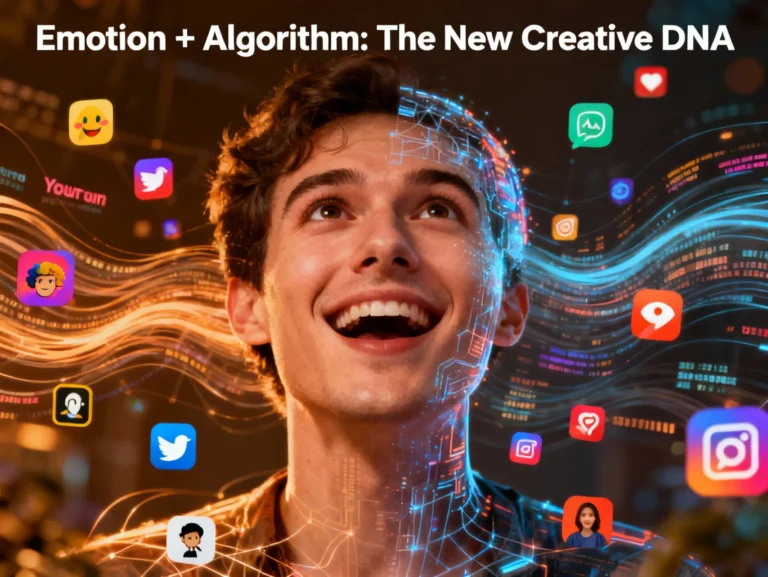
The core of the viral campaigns is emotion – surprise, delight, nostalgia, laughter. Delhi-based creative agencies are scanning online sentiment using AI-driven tools, which are able to identify trending cultural details, including anticipating the next meme. Then they pour those discoveries into a mind-stimulating idea which strikes a chord where people feel it.
As an illustration, they can utilise AI-based advertising tools to examine previous social sharing, engagement, and real-time responses. That perception is the trail of the breadcrumbs to a campaign which is not only to be noticed, but also shared. In other words: AI marketing in Delhi isn’t about replacing creativity – it’s amplifying it. In fact, a survey found that while 42 % of Indian companies are in the experimentation phase with AI, only about 21.5 % rate their AI inclusion as “high”.
So the agencies that are getting this right aren’t just using tools; they’re using them strategically to unlock human reaction.
2. Hyper-personalisation at Scale.
Relevance is one of the largest levers to viral marketing campaigns. A brand message that resonates with me in the sense that it was made to address me personally is much more likely to resonate with me and I will respond-and share. Delhi creative houses are using AI to personalise creative assets dynamically: visuals, copy, even teaser videos change depending on the viewer’s profile, behaviour, location and interest
Here’s the reality: India’s consumer base is hugely heterogeneous, and attention spans are shorter than ever. This is the reason why the agencies are implementing predictive analytics, live data feeds and AI to divide audiences into micro-communities. As soon as you strike that niche with the correct message, the share-factor fly.
3. Content Production and Creative Testing — Faster, Smarter
Let’s be honest: coming up with dozens of creative variations, testing them, optimising them manually – that’s slow and expensive. In Delhi, the creative agencies are pegging hopes on AI-driven advertising platforms to come up with various versions of content (copy, creatives, video snippets) and then conduct real-time A/B tests to find out what works.
As one example, AI can recommend the most appropriate headline that appeals to a younger audience in Delhi-NCR or automatically adjust colour palettes to ensure the highest level of engagement with a certain audience. The result: more rapid iteration, less guesswork, and quicker path to that “viral spark”.
4. Platform-Specific Virality: Social First, Local Focus
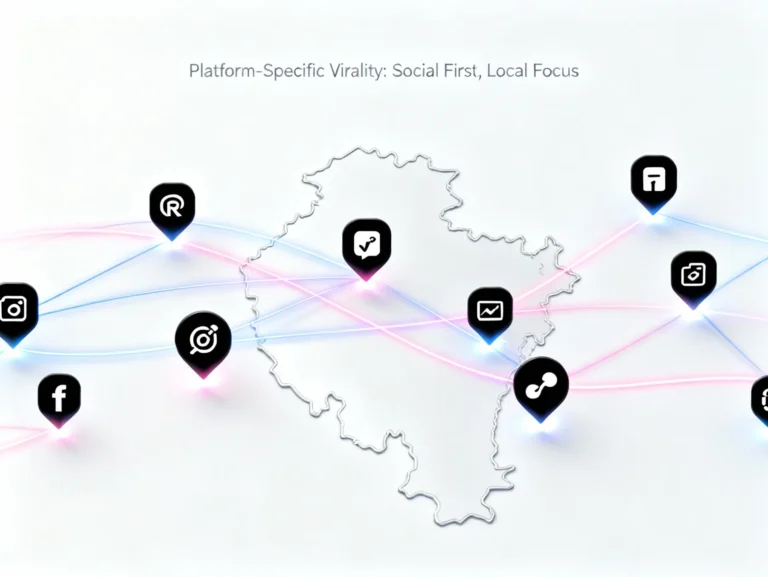
Delhi’s creative agencies know that viral campaigns don’t live solely on TV or print anymore. They live on reels, stories, shares, and conversations. Thus, they’re partnering AI insights with platform-specific creative logic:
- On short-form video platforms they use AI to identify trending topics in real-time and produce quick-turnaround clips.
- For social media, they harness AI to analyse sentiment, tag influencers, and predict hashtag momentum.
- Even on outdoor or ambient campaigns, AI is used to measure movement, foot-traffic, heat-maps, and integrate them into social mechanics.
- In effect, the campaign isn’t just launched — it lives, breathes, reacts, and spreads. Because today’s viral marketing campaigns don’t stop after the launch day — they evolve.
5. Collaboration Between Human & Machine—Creative Teams with Data Scientists
The biggest shift in “AI marketing in Delhi” is the changing team structure. The best-in-class creative agencies in Delhi are not purely creative shops. They’re hybrid: copywriters + art directors + data scientists + machine-learning engineers all sitting at one table.
Because yes — the algorithm can suggest hooks and visuals, but the human twist (tone, cultural nuance, emotion) still matters. A study across India found that 73 % of respondents feel AI will significantly enhance marketing capabilities but won’t replace human creativity and expertise.
This hybrid model enables campaigns that are optimised (by machine) and empathetic (by humans), which is the secret sauce for shareability and virality.
6. Realistic Data & KPIs Driving Viral Outcomes
What does “going viral” look like in numbers? Running alongside the creative, agencies deploy AI-powered dashboards that track: share-rate, amplification rate, reach-to-share ratio, sentiment lift, user-generated content, and second-order shares (people sharing after friends share).
For instance, if an AI-model predicts that a creative variant will yield a 5x higher share ratio in the 18–24 Delhi metro youth segment, the agency might push that variant early, monitor live, and shift budget accordingly. The feedback loop is minute-by-minute, rather than weekly.
Given that the Indian AI-in-marketing market is set to grow with a CAGR of ~28.5 % from 2024 to 2030.
What that means is, more budgets will flow, more data will feed the system, and more campaigns will be optimised around virality metrics.
7. Ethical, Responsible Virality—Because Brand Risk Still Matters
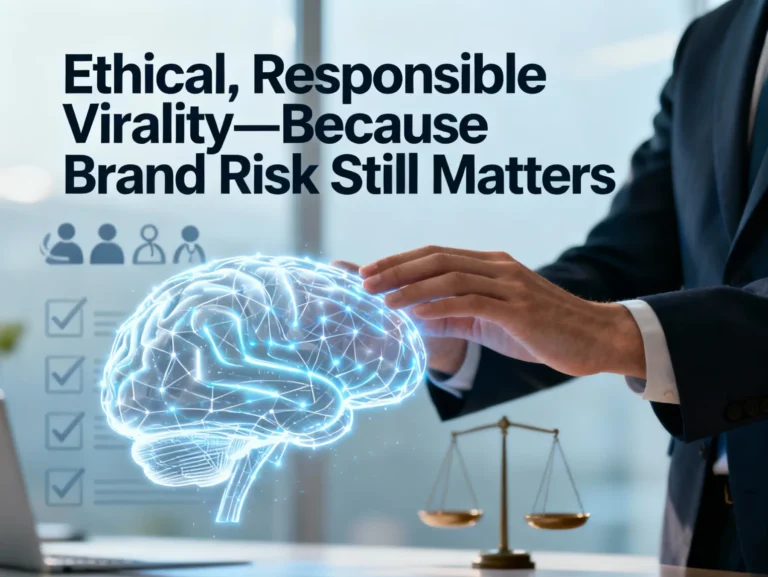
As AI is performing more of the heavy lifting, creative agencies in Delhi are aware of one, large caveat, authenticity and trust. Machines may know what will likely become viral, but they may not always be able to circumvent cultural sensitivities, situations of context, or ethical limits. That’s why top agencies bake in human checks, diversity panels, and bias audits before pushing a campaign live. According to one report, 70 % of Indian marketers are aware of ethical implications of AI in marketing.
The result: viral campaigns built on AI but reviewed through a human lens, aimed to reflect real people, real stories, and real connection — not just clicks.
8. The Road Ahead: Viral Creativity Powered by AI
In 2025, as the Delhi market becomes even more saturated, the difference won’t just be “we launched a campaign”—it’ll be “we launched a campaign that people felt, shared and carried forward”. For that, AI marketing in Delhi isn’t optional — it’s essential.
Creative agencies in Delhi that combine human insight + AI speed + data-driven decision making will own the next wave of viral marketing campaigns.It is not only about applying AI-powered advertising but doing it in a reasonable way. Emotion is what contributes to something going viral because at the end of the day that is what counts.
And to elicit emotion at scale? You need both machine and human.
FAQs
It means using AI tools (analytics, content generation, predictive models) in tandem with local market knowledge (culture, language, behaviour) to craft campaigns that feel regional but scale globally.
No. Most top agencies view machine learning as augmenting human creativity, not replacing it. In fact, a survey showed 73 % believe AI will enhance but not replace human marketing creativity.
They span social-first short videos, interactive microsites, generator-driven UGC contests, region-specific influencer activations supported by AI prediction engines — all designed to spark sharing and engagement.
Look at share-rate (how many viewers share), second-order shares (how many share after someone else shares), sentiment lift (positive mentions), and user-generated content (users creating their own spin).
Short-form video platforms (Reels, TikTok-style), social media stories, micro-influencer networks, and even AI-driven outdoor-digital hybrids – because these formats are naturally shareable and responsive to trends.